
New Edge installs
Families adding monitored life-safety zones while designing the intrusion system.
Life safety · smoke, heat & CO
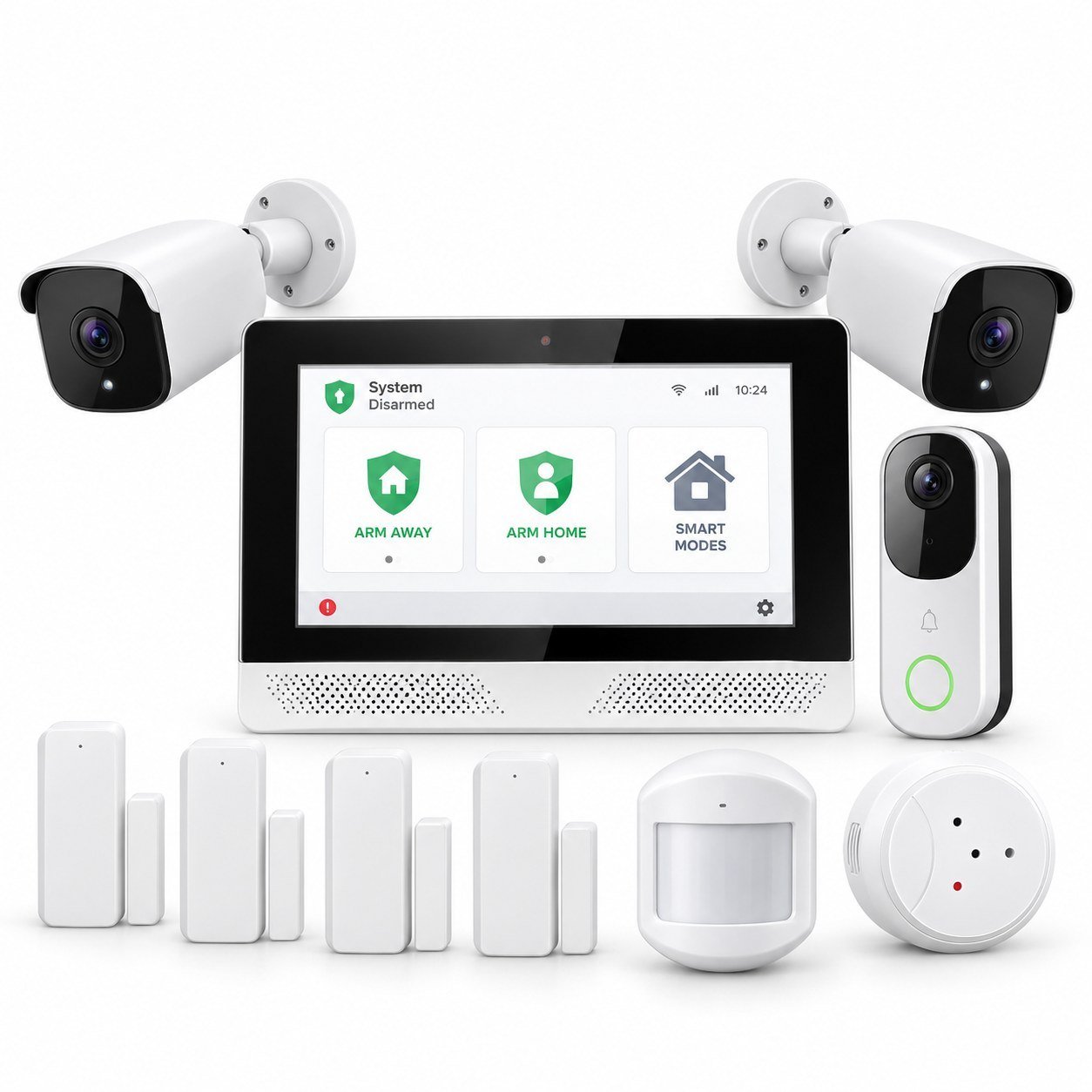
Life-safety detectors protect people, not just property. Home Shield can integrate compatible smoke, heat, and carbon monoxide detectors with a HomeShield 2GIG Edge system and monitoring options — with careful language about what monitoring can and cannot do.
What it is
Standalone smoke and CO alarms in the home are still foundational. Integrating compatible detectors with a monitored security system can add a reporting path when devices trip — depending on the equipment and the monitoring plan you choose.
We discuss smoke/heat combinations, dedicated CO detectors, and listener-style options where they fit. We do not invent listings, certifications, or response-time guarantees on this page.
Who it’s for
Families adding monitored life-safety zones while designing the intrusion system.
Homes replacing aging life-safety devices and asking what can report to the panel.
Spaces where CO and heat risks are part of the conversation with intrusion sensors.
Benefits
Intrusion and life-safety devices planned together for Ohio homes.
Compatible detectors can show as zones on 2GIG Edge when enrolled correctly.
When sold, professional monitoring can include life-safety signals — explained at quote.
Alarm.com may present life-safety alerts where equipment and plan support it.
We verify detector families for Edge rather than promising every device interconnects.
A phone number and team that knows the system you bought.
Equipment & careful claims
Preferred new-install language leans on compatible eSeries smoke/heat and CO detectors for 2GIG Edge. Extended-range smoke options are Edge-firmware conversations when RF paths demand them. Interconnect behaviors between detector families are model-specific — we do not claim universal interconnect.
Code requirements for smoke and CO placement vary by jurisdiction and construction type. We help with security integration; your quote conversation will note when local code or inspector requirements need a separate check. Certification details and response expectations are confirmed during your quote and local requirements review — not invented on a webpage.
Compatible detectors selected for Edge — verify model at design.
Dedicated CO detectors where fuel appliances or attached garages raise concern.
Plans explained at quote — no invented partner brand names on this page.
Related
Life safety sits with flood sensors, monitoring, and the full alarm system.
FAQ
Not automatically. Many homes keep required standalone alarms and add system-integrated detectors for monitoring. We clarify what your plan covers during the quote.
No website can responsibly guarantee dispatch outcomes. Monitoring plans and signal types are explained when you quote — without invented SLAs.
Compatible CO detectors are verified by model for your panel. We prefer current eSeries options for new installs.
We avoid inventing certification marks on marketing pages. Ask during the quote for the datasheet on the exact model proposed.
Free consultation
Tell us about your home’s fuel appliances and current detectors — we’ll explain compatible Edge options and monitoring carefully.
Quick quote request
Compatible smoke, heat, and CO detection with HomeShield — discussed honestly, installed locally.