
New HomeShield installs
Primary entry doors and selected windows paired with Edge from day one.
Entry sensors · HomeShield
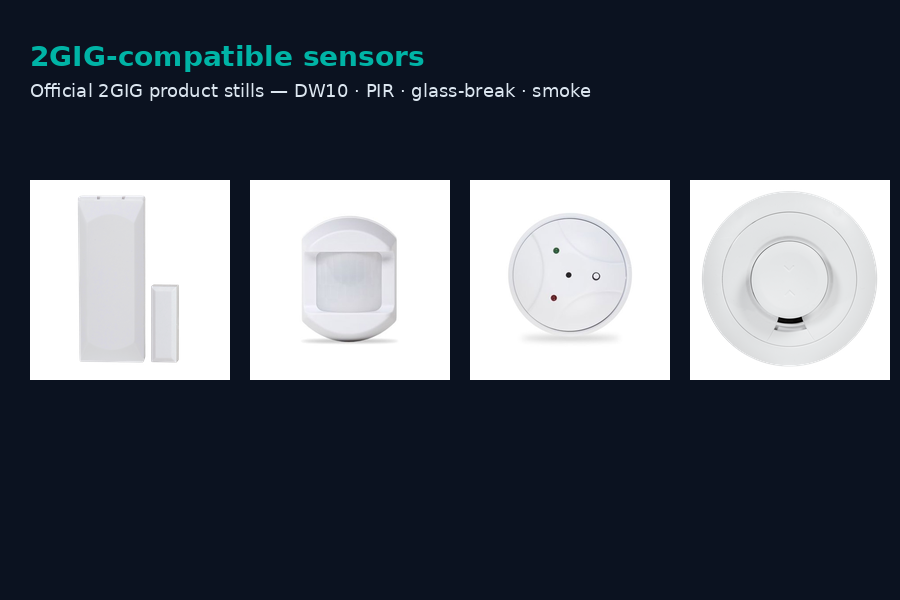
Door and window contacts are the backbone of most residential alarms — they tell the system when an opening moves while you are armed. We prefer encrypted eSeries contacts for new 2GIG Edge installs and verify every model before promising reuse.
What they do
A door/window sensor (contact) typically uses a magnet and a transmitter. When the door or window opens far enough to separate them, the zone reports to your 2GIG Edge panel. That signal can trigger entry delay, an alarm, or an alert depending on how the zone is programmed.
We talk about which openings matter most: front door, garage entry, frequently used windows, and basement doors — not every pane of glass on the house unless the layout calls for it.
Who it’s for
Primary entry doors and selected windows paired with Edge from day one.
Homes that already have a panel but need contacts on a patio door, basement, or seldom-used side entry.
Customers asking whether older contacts can stay — answered by model check, not assumptions.
Benefits
Zone names on the panel and in Alarm.com help you see door vs window events clearly.
Stay and Away behaviors often rely on solid perimeter contacts before motion is even considered.
New Edge installs generally prefer always-encrypted eSeries contacts on 345 MHz.
Outdoor-rated and extended-range families exist for harder openings — confirmed for Edge firmware when needed.
Proper alignment and programming reduce nuisance trips from loose doors and drafts.
Contacts pair naturally with motion, glass break, and monitoring options on the same Edge system.
Install notes
Common categories include surface-mount contacts for most doors, recessed options when aesthetics matter, and outdoor-rated contacts for exposed entries. We prefer eSeries language for new work and avoid dumping long SKU lists on the page.
If you already have sensors, bring photos or model numbers to the quote. Legacy unencrypted 345 contacts and other families may work on Edge in takeover scenarios — but we confirm compatibility rather than promising universal reuse.
Most residential doors and many windows — reliable and serviceable.
Cleaner look when the door and frame can accept a flush install.
eSeries preferred for new Edge; E+ and legacy only when the job and firmware support them.
Related
Keep exploring sensors, monitoring, and the residential hub.
Full residential overview.
Deeper HomeShield + Edge system page.
Interior detection after the perimeter.
When contacts alone are not enough on glass.
What happens after a zone trips.
Ask about door and window coverage.
FAQ
Not always. We prioritize openings that create real risk or daily use. Large glass areas may also use glass-break detection depending on the room.
eSeries is 2GIG’s encrypted 345 MHz sensor family — our preferred primary set for new 2GIG Edge installs. Exact models are selected during design.
Sometimes. Edge can work with certain legacy sensors, but we verify by model and recommend upgrades when encryption, battery type, or reliability is a concern.
With Alarm.com interactive service and a compatible setup, sensor events and alerts can appear in the app — plan features vary.
Related guide
Door and window sensors are usually wireless today, but hybrids exist — compare options in wired vs wireless home security.
Free consultation
Tell us which entries worry you most — we’ll recommend contact coverage that fits a HomeShield Edge plan.
Quick quote request
Door and window sensors designed for 2GIG Edge — verified by model, installed locally in Ohio.